Countdown to DataConnect!
00
DAY
00
HR
00
MIN
00
SEC


Join Women in Analytics for the 2026 DataConnect Conference in Columbus, Ohio on October 29-30, 2026!
In addition to the agenda sessions below, we also offer four workshops on October 28th, the day before the main conference begins. See more information on the workshops page.

October 29
Grand Ballroom
October 29
Keynote
Non-Technical
The biggest advantage in AI may not be the model—it may be the data foundation behind it. This keynote examines how trusted data accelerates innovation and strengthens confidence in AI outcomes.

Grand Ballroom
October 29
Industry Session
Non-Technical

Northpoint Ballroom 2
October 29
Tutorial
Intermediate
Sigma is a cloud-built platform designed for analytics and building interactive AI applications. It allows users not only to build dashboards, but to automate workflows and business processes that traditional reporting tools aren't able to capture. It does all this while also writing everything back to your cloud data warehouse. InterWorks is a data and analytics consulting team and Sigma Elite Partner. We've seen firsthand how Sigma transforms the way teams leverage their data, moving beyond static reporting into dynamic, AI-powered applications. By the end of this session, you'll have built a simple app in Sigma and seen firsthand how the platform leverages AI, from AI-native functions in your cloud data warehouse to AI-enabled features built right into Sigma. More than a demo, you'll leave with a repeatable framework you can start using the moment you're back at your desk.


Northpoint Ballroom 1
October 29
Tutorial
Non-Technical
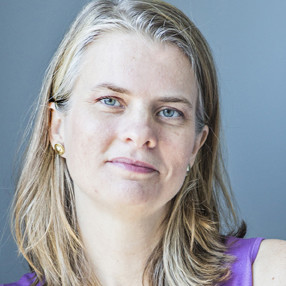
Learn how to bridge the gap between data and decision-making by adopting a practical storytelling methodology that prioritizes clear communication and sensitivity to audience needs. This session introduces a repeatable framework centered on four core principles: knowing your goal, audience, and story; streamlining visual content; enhancing comprehension speed; and telling your story clearly from the audience's perspective. Using concrete, before-and-after examples, participants will see how intentional design choices, visual hierarchy, and narrative emphasis help insights surface faster and stick longer. Attendees will also explore how people actually read charts and dashboards, and how small adjustments in layout, labeling, and emphasis can dramatically improve understanding. Rather than focusing on tools, this session focuses on thinking: how to design data stories that reduce cognitive load, answer the unspoken "so what," and support confident action. Participants will leave with a clear methodology they can apply immediately to dashboards, presentations, and stakeholder communications.
Grand Ballroom
October 29
Beginner
Most analysts spend the bulk of their time on maintenance work. Fixing dashboards, fielding tickets, updating reports, maintaining data models. The actual insight work gets squeezed into whatever time is left. So I started automating it. I set up AI-assisted workflows that handle the repetitive parts of BI maintenance. The final goal is simple: make the infrastructure take care of itself so analysts can spend time on analysis that actually matters. Now as we're hiring more people, this approach is shaping how I think about the whole team. I don't want analysts spending their days maintaining dashboards. I want them doing the work that requires human judgment - interpreting data, presenting to executives, asking better questions. This talk walks through what I automated, how I did it, and what I learned about where AI genuinely saves analyst time versus where it just creates new problems. If your team is buried in maintenance work and struggling to get to the interesting stuff, this one's for you.

October 29
For executive ticket holders only. AI is fundamentally reshaping the workforce - and the biggest questions are no longer technical. How should we hire when roles are changing faster than job descriptions? What should leaders expect from teams when AI can dramatically increase individual productivity? Which work should remain human, which should be delegated to AI or automated agents, and how do we make those decisions? How should organizations rethink budgets, headcount, education, and skill development? This executive session brings leaders together to explore these questions from a practical, organizational perspective. We’ll discuss how AI is transforming role definitions, organizational culture, workforce planning, and leadership expectations - and how leaders can help their teams adapt without creating a culture of constant disruption or burnout. Rather than focusing on AI hype or hypothetical futures, the conversation will center on the decisions leaders are making now to build organizations that can effectively combine human expertise with increasingly capable AI systems.



Cypress 1
October 29
All Levels
Grand Ballroom
October 29
Intermediate
Learn how we turned scattered and disjointed reference data into a governed golden source: one centralized tool, clear ownership, standard workflows, and reusable patterns that improve data quality, integration, and trust. Organizations rely on reference data—codes, hierarchies, and classifications—to keep reporting, operations, and analytics in sync. Yet this data is often scattered across systems, managed manually, and owned inconsistently creating integration headaches and trust gaps. This session shares how we are building an enterprise reference data management capability centered on a centralized data governance tool as a governed "golden source" and a reusable framework rather than a one-off project. We will walk through the journey from fragmented local lists to a centralized environment that models golden entities, steward's changes through workflows, and delivers certified versions to consumers such as reporting applications, data warehouses, and finance platforms. Along the way, we'll cover the governance structures (committees, framework, ownership), integration patterns (APIs vs. outbound staging), and change management practices that make the capability sustainable. Attendees will leave with a practical view of what it takes to stand up reference data as an enterprise capability: how to prioritize domains, align producers and consumers, balance enterprise standards with local needs, and measure success through improved interoperability, reduced manual effort, and gain higher confidence in key reports.
.jpg)
Grand Ballroom
October 29
Featured Speaker
JobsOhio has been strengthening Ohio’s competitiveness through AI—both internally, by deploying innovative proprietary AI solutions, and externally, by building a thriving AI ecosystem across the state. We continue to build the full ecosystem AI companies need to grow: power, compute capacity, a skilled talent pipeline, fast-moving business climate, and a central Midwest location. This session breaks down JobsOhio's strategy for establishing Ohio as an AI Super Sector, showing how these four pillars come together into one coordinated play for AI investment. Attendees will hear how Ohio defines "AI Ready" in practice, the benchmarks it tracks, the partnerships driving progress, and what other states can learn from its approach.
Grand Ballroom
October 29
All Levels
Trust is the foundation of every successful data and AI initiative. It begins with high-quality, well-governed data and grows through transparent processes, reliable systems, and responsible analytics. When these elements are in place, organizations move beyond producing insights to making confident, informed decisions that drive real impact. This year’s theme explores how data professionals, technology leaders, and business stakeholders work together to build trust across the entire lifecycle, from data creation to AI and the decisions that shape our businesses and communities.



Northpoint Ballroom 1
October 29
All Levels
Foster families are doing the hardest work in child welfare. They open their homes to children who have lost everything familiar. They do this while working with a case team of adults, who are making high-stakes decisions from fragmented, siloed information. The systems built around child welfare are not designed for the people providing daily care. The foster parent has no formal channel to contribute to the picture that shapes that child's future. FosterConnect exists because I got tired of waiting for someone else to build it. Using AI as a force multiplier, I built a working MVP in under a week at nearly zero startup cost. We are now building toward a platform designed to meet compliance standards, giving foster families a secure, unified tool that puts the child front and center. Attendees will leave with a clear framework for AI governance, honest account of what AI-assisted development looks like in practice, and why foundational knowledge is core to success. The barrier between a good idea and working proof has never been lower. This session is about what you do with the tools, the knowledge, and the experience you already have to build for the most vulnerable populations.

Northpoint Ballroom 2
October 29
AI & ML
Intermediate
Engineers spend a lot of time during on call to fix operational Spark failures and retrying jobs or fixing upstream data quality issues, using an Agent to automate this loop can save a lot of time and effort. This session will explore how we can use self-correcting agents to provide details on data quality and handle operational failures, this would reinstate the trust in the dataset the company owns to make business decisions and make downstream executive dashboarding show the correct/trusted results. This talk also plans to cover common design patterns, human-in-loop workflows, guardrails for using agents in production, MAS (multi agent systems) and so on.

Grand Ballroom
October 29
Leadership & Strategy
Most organizations believe their biggest data challenges are technical. They invest in new tools, rebuild pipelines, and create more dashboards, expecting better decisions to follow. They usually don't. The real problem is not access to data. It is misalignment in how data is interpreted and used across teams. In many organizations, marketing, commerce, and data functions each operate with their own metrics, definitions, and perspectives. Each view is valid in isolation, but incomplete as a whole. The result is multiple versions of the truth, conflicting narratives, and decisions that do not reinforce each other. This session focuses on what actually bridges that gap. Through real-world examples, this talk explores why good data still leads to poor decisions, how misaligned interpretation creates hidden risk, and what it takes to move from fragmented insights to a single, decision-ready narrative. Attendees will learn how to identify misalignment in their own organizations, how to reframe data conversations around decisions instead of metrics, and how to create clarity without adding more complexity.

Grand Ballroom
October 29
Driving Value & Communicating Insights
A department chair at my university emailed me last October: "Can you build me a dashboard that shows enrollment trends by program?" I said sure. I asked three follow-up questions. By the fourth question, we had a completely different project. She did not want enrollment trends. She wanted to know which programs to cut before the provost asked. The dashboard was a shield. The question behind the question was: help me make a decision I am afraid to make, and give me something to point to when someone challenges it. I have fielded roughly 1,200 data requests across 10 departments in the past three years. Financial aid, facilities, registrar, enrollment, advancement. People whose entire careers are built on institutional knowledge, not data literacy. The pattern is always the same: they ask for a thing (a report, a dashboard, a number), and the thing they ask for is almost never the thing they need. We teach SQL. We teach Tableau. We teach Python. Nobody teaches the 10-minute conversation that decides whether the next 40 hours of analyst work produces something useful or something that gets opened twice and never again.
.jpeg)
Grand Ballroom
October 29
Keynote
All Levels
In her keynote, Polly examines the high-stakes journey from raw data to the executive confidence required to act on AI insights. Drawing on her history of scaling massive AI systems at Amazon, she breaks down the "Trust Continuum," showing how rigorous data governance and transparent design transform technical outputs into reliable outcomes. Polly will share necessary steps to build the internal certainty needed to move AI initiatives from experimental pilots to impactful, real-world decisions.

Grand Ballroom
October 29
All Levels
Edgewater
October 29
Stick around after Day 1 talks conclude for our one-of-a-kind After Party supported by the team at Slalom! Reconnect with old friends and meet new connections while enjoying food, drinks, music, and great conversation.
October 30
Grand Ballroom
October 30
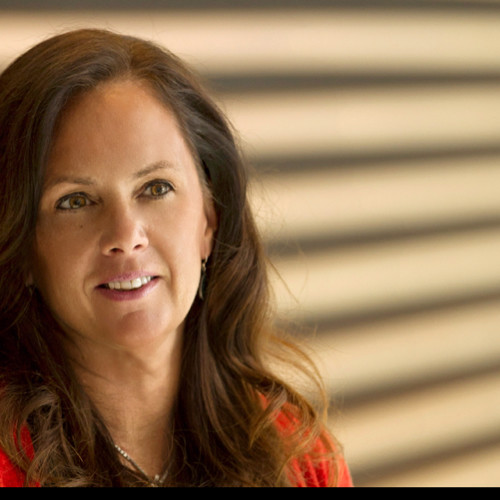
Jane will explore how one of the world’s leading museums is using technology, data, and AI to create experiences that visitors feel confident engaging with. She’ll share how trust is intentionally built into the creative process, from curating data-driven insights to designing AI-powered experiences that enhance human connection with art.
Grand Ballroom
October 30
Industry Session
Non-Technical
Northpoint Ballroom 2
October 30
Tutorial
Intermediate
Most AI governance conversations stall at the policy level — frameworks everyone nods along to but nobody knows how to apply to their actual use case. This tutorial fixes that. You'll bring a real (or sample) AI use case from your organization and take it end-to-end: build a live blueprint of the initiative, layer in real context through guided questions, run it against a customizable risk framework grounded in standards like NIST AI RMF and ISO 42001, and generate the guardrails and policy-as-code output your engineering team would actually need to build against. You'll leave with a working risk profile, a starter framework you can adapt for your own org, and a takeaway deck summarizing what you built — ready to bring back to your team. Built for AI/ML engineers, risk and compliance leads, and anyone accountable for getting an AI initiative through governance without slowing it to a crawl. No AI governance background required — just a use case and a laptop.
Northpoint Ballroom 1
October 30
Tutorial
Intermediate
"Building a standalone AI agent that looks great in a local demo is relatively straightforward. The real headache starts when you connect multiple autonomous agents together, hook them up to enterprise data pipelines, and deploy them to real users. Non-deterministic outputs, unexpected model drift, and security vulnerabilities like prompt injection quickly turn a clean codebase into an operational nightmare. In this session, we'll step away from the hype and look at what actually happens when multi-agent architectures meet enterprise-scale workloads. Drawing from real-world engineering experiences, I'll walk through the specific architectural bottlenecks that crop up during orchestration and state management. We will look at practical, open-source safety and evaluation frameworks designed to continuously stress-test these systems before they hit production. Attendees will walk away with a clear blueprint for building robust, multi-layered guardrails that keep autonomous systems predictable and secure without tanking processing latency or driving up API costs."

Grand Ballroom
October 30
Beginner
Organizations have more dashboards, reports, and AI-generated insights than ever before. Yet many teams still face the same challenge: people understand what happened, but remain uncertain about what to do next. This session introduces a practical framework for understanding why analytics often stops short of influencing decisions. Through the concept of the Decision Stack, we will explore the progression from information to insight, recommendation, and ultimately decision support. Along the way, we'll examine why many analytics systems succeed at delivering information but fail to reduce the cognitive effort required to take action. Drawing from real-world examples across analytics, AI-assisted workflows, and decision-support systems, the session will explore when deterministic analytics is essential, where AI can provide meaningful value, and how trust, accountability, and human judgment shape successful outcomes. We will also discuss practical approaches for evaluating whether a system is merely generating insights or genuinely helping people make better decisions. Attendees will leave with a framework they can immediately apply to dashboards, reporting workflows, and AI-enabled analytics products, helping them identify the often-overlooked layer between insight and action and design systems that people actually use.

Grand Ballroom
October 30
Governance & Risk
This session introduces a practical, field-tested framework for executing data programs under regulatory pressure. When expectations are rigid, visibility is high, and success depends on how well cross-functional teams can align and deliver under constraint, communication becomes more important than ever. Drawing from experience leading compliance program execution and supporting data governance initiatives in a large financial institution, this talk breaks down ways to structure programs that hold up under regulatory oversight while continuing to enable forward momentum. It focuses on the real-world execution challenges that arise when risk, compliance, technology, and business teams each operate with different priorities and definitions of success. Attendees will learn a repeatable approach to improving cross-functional alignment. We will talk about reducing execution friction, and embedding governance in a way that supports delivery rather than slows it down.

Grand Ballroom
October 30
Non-Technical
The DataConnect Conference is proud to present the Data Visualization Competition. This esteemed event invites participants to submit their data visualization projects, where creativity, innovation, and insightful storytelling converge. During this session we will be awarding the winners of the competition and sharing their project submissions.
Grand Ballroom
October 30
Grand Ballroom
October 30
Featured Speaker
In healthcare, trust is not a feature—it is the foundation. As AI systems increasingly influence clinical decisions and operational workflows, governance becomes the user experience layer that ensures safety, fairness, and transparency. This presentation introduces a practical framework for embedding trust into AI governance, drawing from institutional learnings and global standards.

Northpoint Ballroom 1
October 30
Leadership & Strategy
All Levels
"I've been the person over-explaining a chart to a room of execs who stopped listening, and I've been the exec flipping to slide 12 trying to find the point. After 20 years leading technical and customer-facing teams at SaaS companies, I've landed on three principles that changed how I communicate with data: Start with the end, not the beginning Create visualizations that don't make the viewer think Ruthlessly edit (the appendix is your friend) I'll walk through before-and-after examples, showing how to get to the point and not lose your audience"

Northpoint Ballroom 2
October 30
Data Engineering & Management
All Levels
In the race to deploy AI, we often focus on the "science" while neglecting the "pipes." The result? Silent failures, broken dashboards, and data scientists spending 80% of their time fixing upstream schema changes. This session moves beyond the AI hype to address the engineering reality: How do we build systems that don't break? Drawing on a decade of experience in Telecom and Industrial AI, I will introduce the concept of Data Contracts—API-like agreements between data producers and consumers. We will explore how to treat "Data as a Product" by implementing automated enforcement and quality guards within a Lakehouse architecture. The "Why": Understanding the hidden cost of silent data failures in ML pipelines. The "How": A practical framework for defining YAML-based contracts to enforce schemas and data freshness. The Tooling: A look at how to leverage PySpark and Delta Lake to build "circuit breakers" for your data. The Strategy: How to shift your team's culture from reactive firefighting to proactive quality engineering.

Grand Ballroom
October 30
AI & ML
AI agents are often demoed as seamless, intelligent systems that can reason across documents and databases, but building the AI agent in the real world tells a different story. In this session, I will share what actually happened when I built an AI agent that interacts with PDFs and databases. I will also explain how the promising prototype quickly turned into real-world challenges, which are hallucinated answers, inconsistent query behavior, broken retrieval logic, and also edge cases that were not obvious until users got involved. This talk goes beyond how the system was built and focuses on what I learned once things started to break. I will walk through the key failure modes and the practical changes I made to improve the reliability. AI agents are not just about generating responses, they are about building systems that can act and be trusted in real workflows. The audience will leave with a clear understanding of where the systems fail and how to design them to work in the real world.

Grand Ballroom
October 30
Hosted By

© 2025 Women In Analytics
All rights reserved.
